
A Failure to Launch
Play A Failure to Launch
A Failure to Launch Screenshots









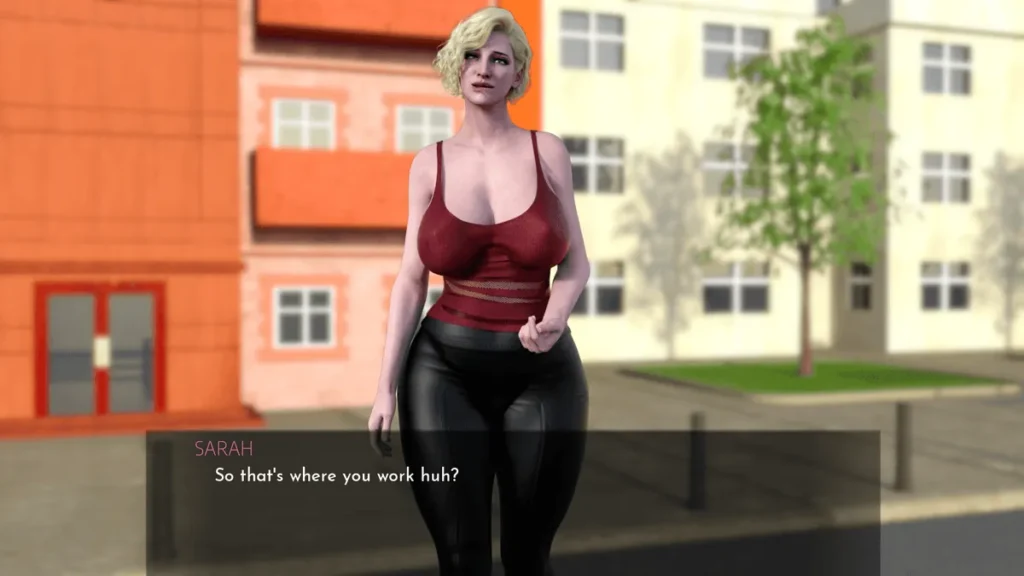
A Failure to Launch review
Explore the mechanics, storyline, and unique features of this narrative-driven adult interactive experience
A Failure to Launch stands out as a narrative-driven interactive experience that blends storytelling with engaging gameplay mechanics. The game follows Alex, a 21-year-old character navigating life after being evicted from his father’s house, as he attempts to build a meaningful existence in a world undergoing significant social change. Rather than traditional combat or dungeon-crawling, this game challenges players to overcome procrastination, manage relationships, and make meaningful life choices. Whether you’re interested in character-driven narratives, branching storylines, or unique game mechanics that reward personal growth, understanding what makes this game distinctive can help you decide if it’s worth your time.
Understanding the Core Gameplay Mechanics and Systems
You’ve played games where you save the world, slay dragons, or build empires. But what about a game where the greatest enemy is your own unmade bed, and the ultimate quest is to finally do your laundry? 🛏️ That’s the genius of A Failure to Launch gameplay mechanics. It replaces swords and spells with something far more relatable: the daily struggle against procrastination and comfort.
Forget health bars and mana points. Your journey here is measured by your Energy and Ambition system, your willpower against the creeping Consequence of Comfort game mechanic, and the rhythmic push-and-pull of the Momentum Wheel tracker. Victory isn’t about defeating a boss; it’s about defeating the inertia that holds you back. Let’s dive into the systems that make this narrative-driven experience so uniquely compelling.
Energy and Ambition: The Foundation of Progress
In most games, if you run out of health, you die. In A Failure to Launch, if you run out of Energy or Ambition, you… just stay put. And that’s the whole point. 🎯 These two gauges are the heartbeat of your character’s progress.
Think of Energy as your physical and mental capacity to do things. It’s drained by everything from staying up too late scrolling on your phone to the mental exertion of a stressful family call. Ambition is your drive, your want to do things. It’s a more fragile resource, easily crushed by small failures or negative feedback, but powerfully boosted by tiny successes.
Here’s the catch: you need both to take meaningful action. Having the Energy to clean the kitchen means nothing if your Ambition is at zero, crushed by a rejected job application you saw earlier. Conversely, you might be bursting with Ambition to finally write that novel, but if your Energy is depleted from a night of poor sleep, you’ll just stare blankly at the screen.
Managing this delicate balance is the core strategic loop. Do you use your morning Energy on a high-Ambition task like updating your resume, or on low-effort “maintenance” tasks like making breakfast to slowly rebuild your stats? This A Failure to Launch gameplay mechanics approach turns everyday decisions into tense, meaningful strategy.
To see how these core systems interact with other mechanics, here’s a breakdown:
| Core Mechanic | Description | Gameplay Impact |
|---|---|---|
| Energy & Ambition System | Dual resource pools representing your capacity and drive to act. Required in tandem for most significant tasks. | Forces strategic planning of your day. You must balance draining tasks with restorative ones to avoid burnout or apathy. |
| Consequence of Comfort | A passive system where avoiding tasks causes your environment and relationships to visibly and functionally decay. | Creates constant, gentle pressure. There is no “pausing” your problems; neglect has immediate, tangible repercussions. |
| Momentum Wheel Tracker | A circular visual meter that fills with consecutive positive actions and drains with avoidance or failure. | Visualizes the psychological “flow state.” Rewards consistency and makes breaking a negative cycle a clear, achievable goal. |
| Interactive Dialogue System | Context-aware conversation menus that change based on location, time, and your character’s current mental state. | Makes every conversation unique and reactive. You can’t just pick the “right” answer; your available emotions and responses are shaped by your gameplay. |
The Consequence of Comfort System Explained
This is where A Failure to Launch truly innovates. In many games, if you ignore a side quest, it just waits for you forever. Not here. The Consequence of Comfort game mechanic means that your inaction is never neutral. It is always an active choice with escalating repercussions. 📉
Let me give you an example from my own playthrough. I was playing as Alex, and I kept ignoring the growing pile of dishes in the sink. I had the Energy, but I’d use my Ambition on easier, more immediately gratifying things like playing video games in-game (so meta, right?). After ignoring this for three in-game days, the Consequence of Comfort system kicked in.
First, a visual cue: the kitchen counter became cluttered with more than just my dishes. Old mail and empty packages appeared. Then, a functional one: the option to “Make a Proper Meal” grayed out, leaving only “Order Takeout” or “Eat Cereal.” Finally, a social consequence: when my in-game friend visited, a new, passive-aggressive interactive dialogue system option popped up for them: “Wow, you’re really leaning into the chaotic aesthetic, huh?” My comfort in avoiding a chore had directly altered my environment, limited my choices, and strained a relationship.
This mechanic applies to everything. Avoid checking your emails? The inbox number climbs, and you might miss a message from a friend asking to hang out, locking you out of a social event. Put off tidying your living space? You lose the ability to invite people over, closing off entire branching narrative choices that could lead to new connections or support. The game world is alive and responds to your neglect. It doesn’t judge you—it just realistically simulates the slow, creeping cost of putting things off. 🐌
The Consequence of Comfort game mechanic teaches a powerful lesson: maintenance is not a pause in progress; it is progress. Letting things slide isn’t free; it accrues interest.
Momentum Wheel and Flow State Mechanics
We’ve all felt it—that “flow state” where you start a task and, before you know it, you’ve cleaned your entire apartment. A Failure to Launch brilliantly visualizes this psychological phenomenon with the Momentum Wheel tracker. 🔄
Located discreetly on your UI, the Momentum Wheel is a semi-circle that fills with segments as you complete tasks in succession. Wash a dish? A segment fills. Put away a book? Another segment. Respond to a text? Another one. Each success makes the next action cost slightly less Ambition, modeling the real-world feeling of getting on a roll.
But the wheel is fragile. Choosing a major “comfort” action—like binge-watching a show when you’d planned to job-hunt—can crack and empty multiple segments. A negative social interaction or a task failure can also drain it. When the wheel is full, you enter a “Flow State,” granting temporary bonuses to Energy regeneration and increasing the success rate of challenging tasks. It’s the game rewarding you for building positive habits.
This is intricately tied to the character progression system. Progression isn’t about earning XP to level up a static stat. It’s about what you unlock through consistent action.
Here’s a practical gameplay example: Early in the game, your character’s bedroom is a mess. Among the clutter is a guitar. You can’t interact with it. To “unlock” it, you need to complete a small personal challenge chain via the character progression system:
1. Task: “Clear the floor beside the bed.” (Cost: Low Energy, Medium Ambition).
2. Result: The trash and clothes are gone. A new task appears: “Put the guitar on its stand.”
3. Task: Complete the new task.
4. Unlock: The guitar is now interactable. You can choose to “Practice Chords” as a new after-work activity, which slowly builds a skill. More importantly, this new hobby becomes a topic in the interactive dialogue system. When a character asks what you’ve been up to, you now have the branching narrative choice to talk about music, potentially leading to deeper conversations and new story paths.
This is the essence of progression. You’re not getting +5 to Charisma. You’re literally creating the space—both physical and mental—for new skills and connections to enter your life. The Momentum Wheel tracker facilitates this by making the chain of small tasks feel rewarding and fluid, rather than a grind.
Every conversation in this world is filtered through the interactive dialogue system. This isn’t a simple list of pre-written replies. The options you see are dynamically generated based on a trio of factors: your Location (are you at a buzzing cafe or your dark bedroom?), the Time of Day (morning optimism vs. late-night anxiety), and most importantly, your character’s Current Mental State (a composite of your Energy, Ambition, and Momentum).
So, if your Momentum Wheel is full and your Ambition is high, you might see bold, optimistic dialogue choices. If you’re drained and your room is a mess, the same conversation might only offer sarcastic, defeated, or avoidant responses. The system ensures that your gameplay performance directly shapes your narrative persona, making the branching narrative choices feel earned and authentic. You can’t role-play as a confident go-getter if your gameplay reflects someone buried under the Consequence of Comfort. The two are inextricably linked.
Ultimately, the A Failure to Launch gameplay mechanics work in symphony to redefine what it means to “play” a game. Your inventory is your living space. Your quest log is your to-do list. Your character sheet is your own mental well-being. By mastering the Energy and Ambition system, respecting the Consequence of Comfort game mechanic, and riding the wave of the Momentum Wheel tracker, you don’t just complete a game—you engage with a powerful, interactive reflection on the small battles that define our days. And winning those battles, one cleaned dish or sent email at a time, is its own profound kind of victory. 🏆
A Failure to Launch offers a distinctive approach to interactive gaming by redefining what success means in a virtual world. Rather than slaying dragons or conquering dungeons, players navigate the genuine challenges of adult life—finding employment, building relationships, and overcoming personal obstacles. The game’s innovative mechanics, particularly the Energy & Ambition system and Consequence of Comfort framework, create meaningful consequences for player choices that extend beyond simple story branching. With its character-driven narrative, multiple branching paths, and emphasis on personal growth, the game delivers a memorable experience for players seeking depth and replayability in their interactive stories. If you’re interested in games that combine engaging mechanics with meaningful storytelling and player agency, exploring what A Failure to Launch has to offer could provide a refreshing alternative to traditional gaming experiences.