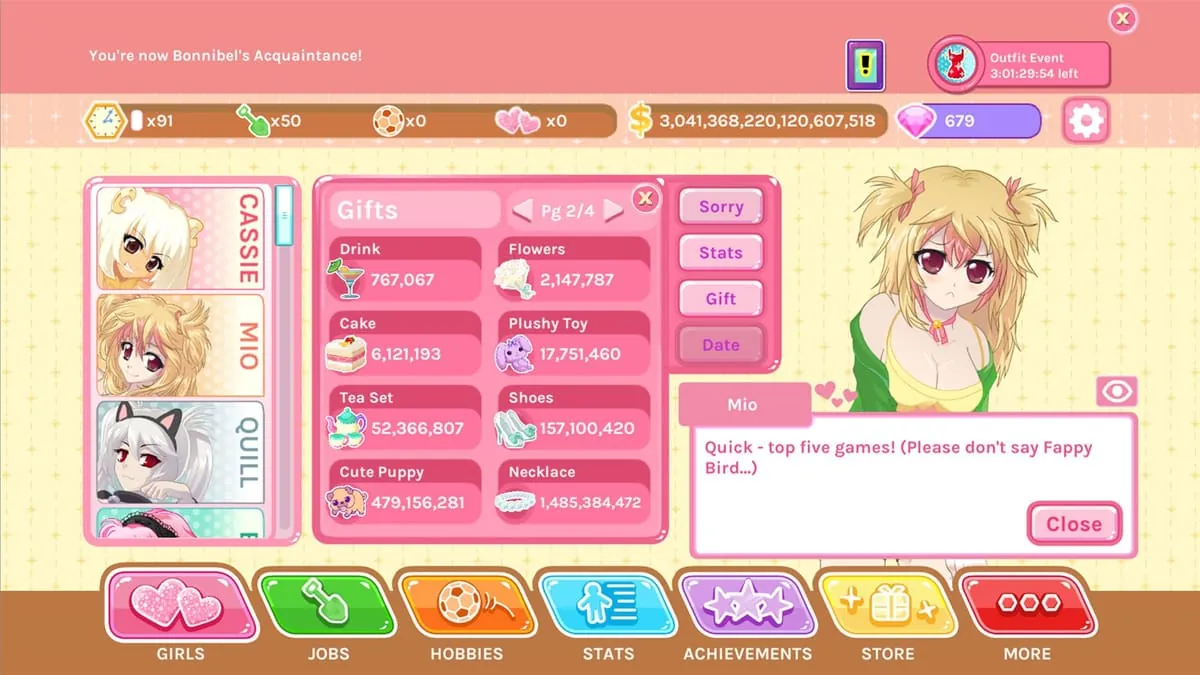
Corporate Culture
Play Corporate Culture
Corporate Culture Screenshots






















Corporate Culture review
Master the office politics simulation with our complete walkthrough and strategy tips
Corporate Culture stands out as a narrative-driven simulation that transforms the mundane office environment into a complex web of relationships and strategic decision-making. Unlike traditional games that pit players against clear antagonists, this title challenges you to navigate workplace dynamics where every interaction carries weight and consequences. The game’s unique approach to storytelling through gameplay mechanics creates an immersive experience where your choices genuinely shape your professional trajectory. Whether you’re drawn to the intricate social systems or the branching narrative paths, understanding the core mechanics will enhance your experience and help you uncover all the game has to offer.
Understanding Corporate Culture Game Mechanics and Gameplay
Let’s be honest—we’ve all had that moment at work where we’ve thought, “This feels like some bizarre game.” 🎮 The unspoken rules, the delicate dance of egos, the choice between speaking up or staying quiet. Corporate Culture, the brilliant office simulation game, takes that exact feeling and turns it into a compelling, strategic playground. Forget managing spreadsheets or virtual coffee machines; this workplace strategy game is about navigating the most complex system of all: people. 😉
At its core, understanding the Corporate Culture game mechanics is about realizing that your job title is the least important thing on your business card. Your true currency is social capital, and every interaction is a transaction. The game brilliantly mirrors the subtle, often unspoken dynamics of real office life, where a casual chat by the water cooler can be as strategically important as a formal presentation. Your success hinges not on completing abstract tasks, but on mastering the art of human connection and consequence.
How Relationship Management Drives the Game Experience
If you think you’re here to climb a corporate ladder, think again. You’re here to weave a web. 🕸️ The entire relationship management gameplay in Corporate Culture is the engine that powers everything. This isn’t a simple “like/dislike” meter hovering over a colleague’s head. It’s a living, breathing ecosystem of alliances, debts, rivalries, and unspoken agreements.
I learned this the hard way in my first playthrough. I focused purely on my assigned projects, ignoring my team’s gossip and skipping after-work drinks. I was the model, efficient employee on paper. Yet, when I needed a favor from the IT department to fast-track a tool for my big project, I was met with a backlog of “two weeks.” My colleague, who spent time building rapport with the IT manager, got the same tool in two days. The game had shown me its first law: efficiency is social.
Every conversation is an investment. Listening to a colleague vent about their workload isn’t just being nice—it’s depositing trust into a shared account. Asking for a major deadline extension without having made those deposits first? That’s taking out a high-interest loan. The game tracks these nuances through a hidden, dynamic system where your history with each character influences every future interaction.
Pro Tip: Treat every interaction like you’re planting a seed. You never know which one will grow into a shelter when you need it most. 🌱
This system creates an incredibly authentic office simulation game experience. You’ll find yourself genuinely thinking about the long-term effects of your words, just like in a real workplace. Do you align yourself with the ambitious but cutthroat department head, or the kind but perpetually overlooked veteran? Each connection opens some doors and quietly closes others, shaping your unique path through the corporate maze.
The Role of Player Choices in Shaping Your Career Path
Here’s where Corporate Culture truly shines: your autonomy. The game presents you with seemingly mundane interactive gameplay choices that ripple outwards in profound ways. There is no “good” or “evil” path—only strategic and less strategic ones, each with authentic player decision consequences.
Let’s walk through a real scenario. You’re in a meeting, and a rival colleague, “Mark,” presents an idea that you know has a critical flaw—a flaw you privately discovered earlier. The game presents you with a choice:
- Choice A: Publicly point out the flaw, showcasing your diligence and potentially derailing Mark’s project.
- Choice B: Stay silent during the meeting, but privately mention the issue to your shared boss afterwards.
- Choice C: Say nothing at all, let the project proceed, and allow the flaw to reveal itself naturally later.
This isn’t a morality quiz. It’s a strategy puzzle. 🧩
If you choose A, you might gain a short-term reputation for being sharp, but you’ll make a powerful enemy in Mark and potentially be seen as disruptive by others. If you choose B, you may earn your boss’s trust as a discreet problem-solver, but you risk the boss mentioning your involvement to Mark anyway. If you choose C, you avoid immediate conflict, but the eventual fallout could damage the entire team, including your own standing.
The genius of the Corporate Culture progression system is that it doesn’t judge you. It simply reflects the complex outcomes of your office politics simulation back at you. You become a shrewd operator not because the game tells you “you are now shrewd,” but because your actions force you to learn, adapt, and think three steps ahead. Your career path is literally a mosaic of every coffee chat, every email you chose to send or ignore, and every alliance you forged or burned.
To visualize how these strategic approaches branch out, let’s look at a comparison of core philosophies within the game:
| Gameplay Approach | Core Strategy | Short-Term Outcome | Long-Term Consequence | Best For Players Who… |
|---|---|---|---|---|
| The Diplomat 🕊️ | Building alliances, mediating conflicts, creating mutual benefits. | High social capital, many willing helpers, fewer direct enemies. | May miss out on solo credit; advancement can be slower but steady. Requires constant maintenance of relationships. | Enjoy the social puzzle and prefer a collaborative, supportive network. |
| The Strategist ♟️ | Calculated moves, subtle power plays, leveraging information. | Efficient problem-solving, gaining key advantages at critical moments. | Can lead to isolation if discovered; high risk/high reward. Creates a complex web of owed favors. | Love long-term planning and manipulating systems without direct confrontation. |
| The Confronter ⚔️ | Direct challenges, claiming credit openly, eliminating competition. | Rapid visibility, clear victories, fast-tracked promotions on occasion. | Accumulates many rivals; creates a hostile environment; one misstep can lead to a collective backlash. | Prefer a high-stakes, aggressive style and are confident in winning head-to-head conflicts. |
Navigating the Interactive Gameplay Systems
So, how does the game technically support this deep, reactive experience? The interactive gameplay choices are baked into every system. When you’re given dialogue options, they aren’t just flavor text—they are levers that adjust your relationships, your stress level, and even other characters’ relationships with each other. The game world remembers everything, creating a persistent history that NPCs will reference weeks later in-game.
The challenge and the storytelling are one and the same. You won’t face “Level 5 Bosses,” but you might face “The Quarterly Review with a Hostile Manager,” and the preparation for that involves weeks of in-game strategic relationship management gameplay. Did you help that manager’s favorite employee last month? That might be your lifeline. The narrative is emergent, born directly from your engagement with the game’s mechanics.
This is balanced with brilliant stress-busting and adventure elements. For a game about office life, it’s surprisingly cathartic and often hilarious. 😂 You can choose to engage in silly side interactions, like starting an unofficial fantasy football league that somehow improves inter-departmental communication, or you can meticulously orchestrate the downfall of a toxic coworker through a series of perfectly timed revelations. It’s your story of corporate survival and triumph.
Currently in version v0.7 and available on Windows and Android, Corporate Culture offers a uniquely reflective experience. You’ll finish a play session and realize you’ve just undergone a masterclass in soft skills and strategic thinking. The Corporate Culture game mechanics teach you that success is a mosaic of hundreds of tiny, conscious decisions. By mastering how you interact with its digital world, you might just find yourself becoming more savvy in navigating your real one—all while having a tremendous amount of strategic fun. 🏆
Corporate Culture delivers a compelling experience that transcends typical office-themed entertainment by making relationship management and strategic decision-making the core of its gameplay. The game’s strength lies in its refusal to moralize player choices while still reflecting their consequences in a dynamic, persistent world. Whether you’re drawn to the intricate social systems, the branching narrative paths, or the challenge of navigating workplace politics, understanding these mechanics will significantly enhance your enjoyment. The balance between being a competent worker and a savvy politician creates genuine tension in every interaction, making each playthrough feel unique and meaningful. As you progress through the game, remember that every conversation, every choice, and every alliance shapes your corporate journey in ways both obvious and subtle.